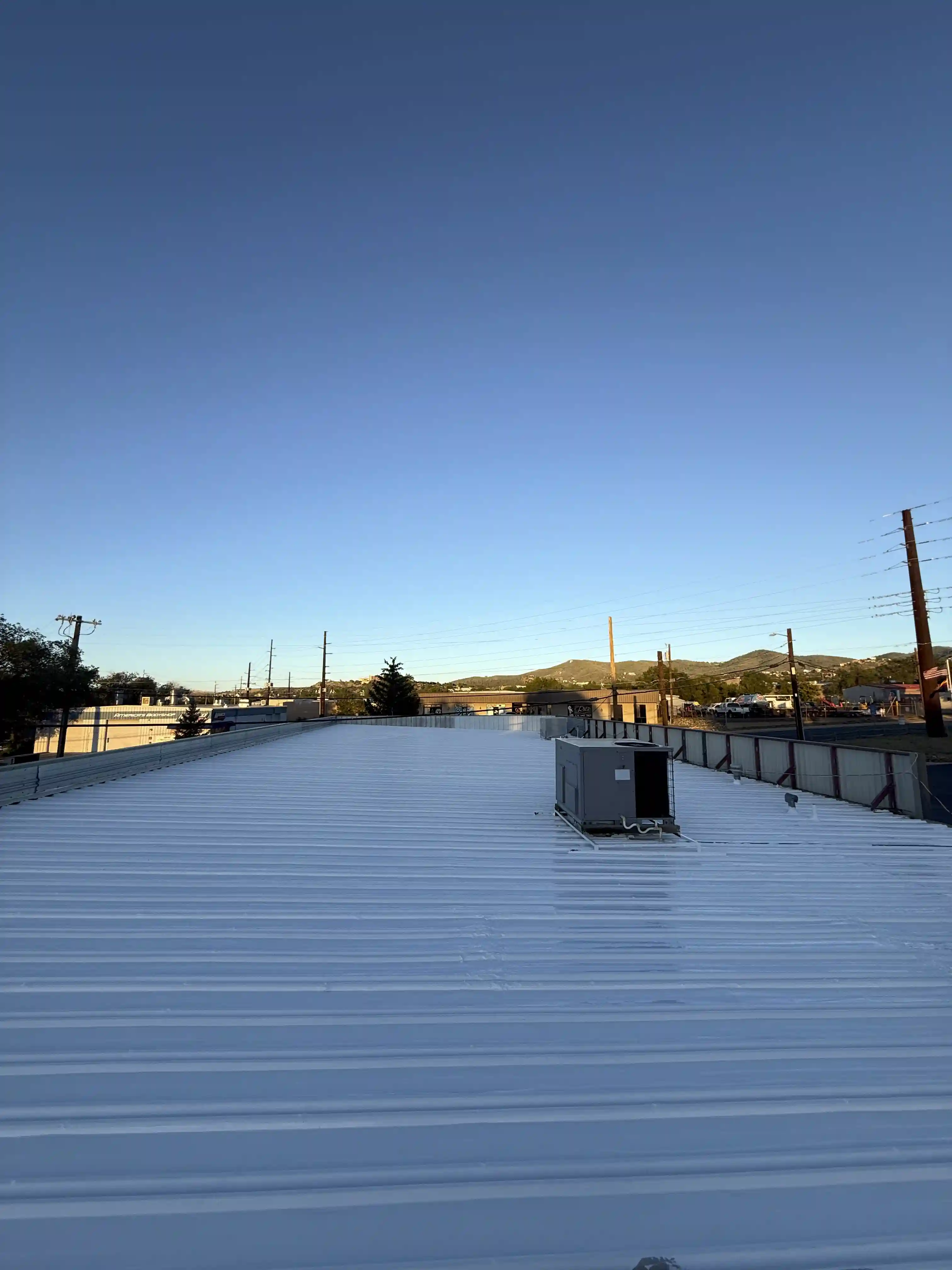
Silicone roof coating for long-term protection.
Restore aging commercial roofs with a high-performance silicone system built to resist UV, standing water, and extreme heat.
Silicone Roof Coating
Extend roof life without a full tear-off.
Silicone coating systems deliver durable waterproofing and reflectivity for commercial roofs. We combine moisture scanning, targeted repairs, and manufacturer-approved application for long-term performance.
Best For
A strong fit for these roof types.
Benefits
Why silicone coatings perform so well.
Outstanding UV resistance
Silicone coatings maintain reflectivity and performance in harsh Arizona sun.
Ponding water protection
Ideal for low-slope roofs where standing water is a concern.
Seamless waterproofing
A continuous membrane reduces leak risk and seals penetrations.
Energy efficiency
Cool roof coatings can support lower HVAC costs during peak months.
Compatibility
Where silicone coatings make the most sense.
Compatible substrates
- TPO, PVC, and EPDM (with proper primers)
- Modified bitumen (SBS/APP)
- Built-up roofing (BUR)
- Spray polyurethane foam (SPF)
- Metal roofs with appropriate prep
- Concrete roof decks
Not ideal for
- Widespread saturated insulation or trapped moisture
- Severe substrate instability requiring tear-off
- Heavily contaminated surfaces without viable cleaning
- Details that can’t be corrected (drainage, flashings, terminations)
System Options
A system matched to your roof conditions.
Silicone restoration (standard)
A balanced system for many low-slope roofs: targeted repairs, seam reinforcement where needed, then silicone applied to specification.
Reinforced detail package
Fabric reinforcement at seams, penetrations, and transitions to strengthen leak-prone areas before the field coat.
High-traffic / walkway areas
Adds walk pads or enhanced protection around HVAC access points and service routes to reduce wear.
Technical Specs
Performance details at a glance.
Dry film thickness
Typically 20–35 mils, depending on system
Ponding water resistance
Designed for long-term waterproofing in standing water
UV durability
Excellent resistance for Arizona sun exposure
Adhesion
Primers selected per substrate chemistry
VOC compliance
Meets regional environmental requirements
Values are typical ranges; exact specifications are confirmed per project conditions and manufacturer requirements.
Our Process
Clear steps from inspection to closeout.
Step 1
Inspection & moisture scan
We assess membrane condition, locate wet insulation, and define the scope.
Step 2
Prep & repairs
Seam reinforcement, flashings, and repairs are completed before coating.
Step 3
Coating application
We apply the silicone system to manufacturer specs for thickness and cure.
Step 4
Final walk-through
We confirm workmanship and provide warranty-ready closeout details.
Maintenance Packages Available
Keep your coating performing long-term.
Seasonal inspections
Spring and fall roof walks to spot punctures, open seams, and clogged drains.
Drainage checks
Keep scuppers, drains, and gutters clear to prevent backups and interior leaks.
Detail touch-ups
Maintain flashings and high-stress transitions to protect the system long-term.
Warranty readiness
We outline recoat timing and maintenance priorities to keep warranty requirements on track.
FAQs
Common questions about silicone coatings.
Why choose silicone over acrylic elastomeric?
Silicone is often preferred where ponding water is common. Acrylic elastomerics can be a great choice when ponding is minimal and reflectivity is a priority.
How long does a silicone coating system last?
Service life depends on thickness, substrate condition, and maintenance. Many systems run 10–20 years with proper inspections and recoats as needed.
Will the roof be slippery?
Some coatings can be slick when wet. We recommend designated walk paths and can add walk pads or surfacing in service areas.
Can you coat over wet insulation?
No—wet insulation and trapped moisture must be addressed first. We moisture-scan and repair affected areas before coating.
More Services
Explore commercial and residential options.
Not sure which direction to go? Compare coating systems or explore residential services for inspections, repairs, and replacements.
Ready to restore your commercial roof?
We’ll confirm roof compatibility, share a clear scope, and keep operations running smoothly during the project.